The Steady Hand
Why Saudi Arabia remains the calmest place to do business in the region
By Rana Maristani, Founder and CEO, R Consultancy Group
I am writing this from Riyadh. The streets are full. The restaurants are busy. The Diriyah construction cranes are still moving on the skyline. The senior officials I met this week walked into the room with the same calm I have come to expect from them, in the same suits, with the same focus on the next ten years rather than the next ten news cycles. If you have been following the international media coverage of the Middle East over the past few months, none of this will match the picture you have been sold.
That gap between the headlines and the lived reality is the most important thing international boards need to understand right now. Saudi Arabia has spent the past decade engineering an economy and a state designed to absorb regional turbulence and keep moving. What we are watching in 2026 is that engineering working as intended.
"Strategy stays steady when the fundamentals still make sense. Execution gets tightened. The serious operators have already learnt to read the difference."

The numbers behind the calm
The fundamentals tell the same story I am hearing in every meeting room. Saudi Arabia closed 2025 with real GDP growth of 4.5 per cent, confirmed by the General Authority for Statistics, with non-oil activities expanding 4.9 per cent and contributing 2.8 percentage points to the overall figure. The IMF has since upgraded its 2026 forecast for the Kingdom to 4.5 per cent growth, the third upgrade in six months, while Fitch is even more bullish at 4.8 per cent. The Public Investment Fund has just approved its 2026 to 2030 strategy and now manages assets exceeding 3.4 trillion riyals, having grown roughly six-fold since 2015. PIF contributed 243 billion dollars to real non-oil GDP between 2021 and 2024, equivalent to around 10 per cent of the Kingdom's non-oil economy, and holds top-tier credit ratings from each of the three major agencies, with Moody's at Aa3, Fitch at A+, and S&P at A-1, all on stable outlook. The 200 billion riyal education budget held firm. The construction pipeline of more than 900 billion dollars across the giga-projects continued to release contracts. The Crown Prince has reaffirmed Vision 2030 momentum into its third and final phase.
These are not the metrics of an economy distracted by regional events. They are the metrics of a country that has decided what it wants to become and is moving toward it with discipline.
What we have seen on the ground
Across the past quarter, our active client pipeline has stayed intact. Boards have tightened travel protocols. Some have shifted execution timelines by a few weeks. Strategy has held. We have closed engagements, signed retainers, and walked clients into ministerial meetings throughout the period. The Saudi side of the table has been consistent throughout, picking up calls, confirming meetings, honouring commitments, and showing the same hospitality that has defined business in the Kingdom for generations.
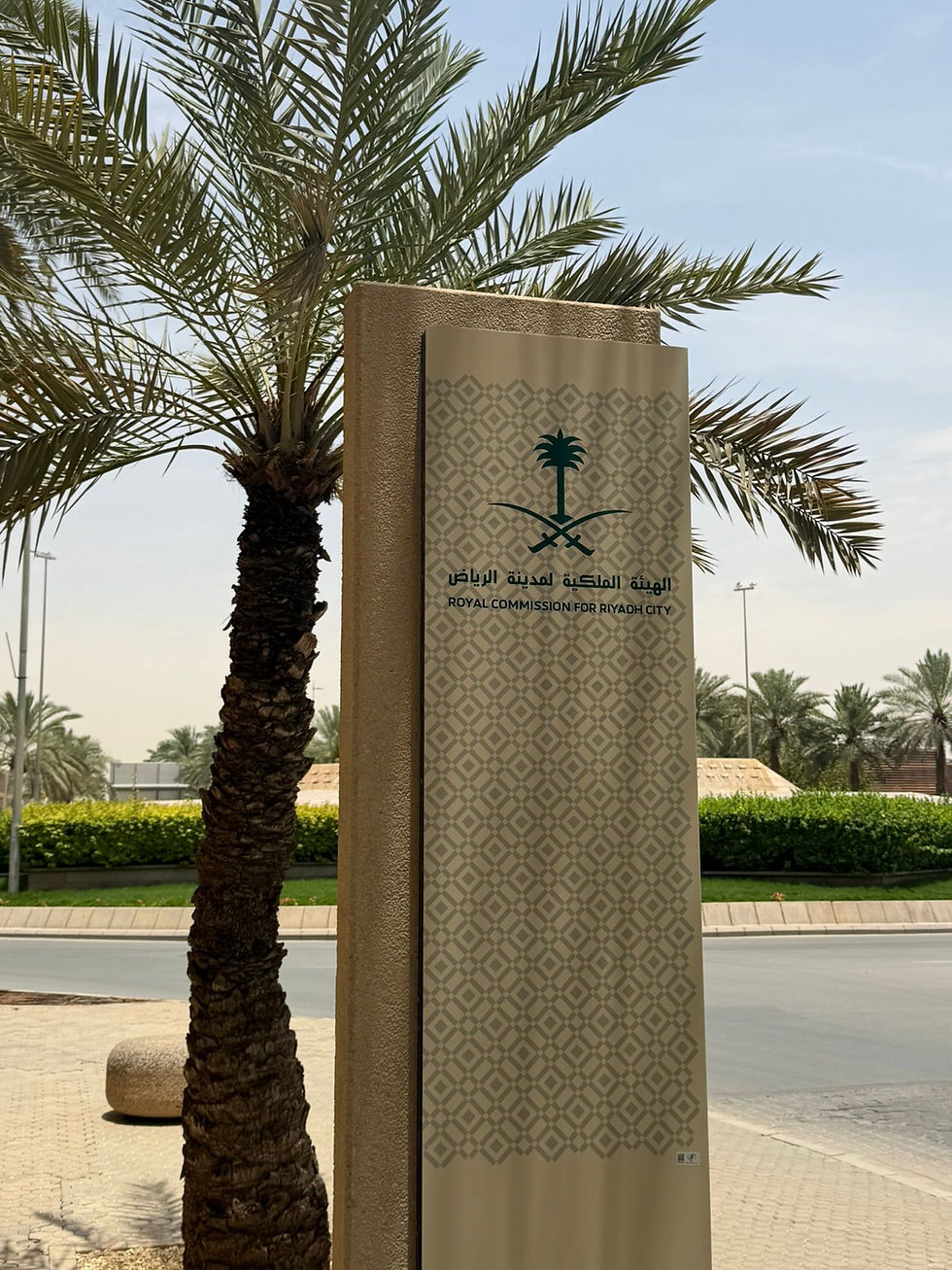
I am in Riyadh this week with a UK school client. Three days that turned into more. Two ministries. A royal commission. A master-planned community considering a campus. Two established operators. Four site visits. The pace of work was the same as it would have been a year ago. Officials moved meetings forward, not backward. Introductions came through within twenty-four hours. The hospitality stretched into long lunches and dinners that turned a delegation into something closer to a family. None of that happens in a country that is paralysed by external events.
The structural reasons Saudi holds steady
There are four reasons international operators should expect this resilience to continue rather than treat it as a temporary calm.
First, the diversification thesis is now built. PIF has spent six years systematically reducing Saudi exposure to oil price volatility and regional uncertainty by building integrated ecosystems across manufacturing, technology, logistics, tourism, mining, and renewables. The non-oil economy now accounts for roughly three quarters of GDP after rebasing. The strategic shift has moved from announcement to operating reality.
Second, the fiscal cushion is substantial. PIF assets under management have grown six-fold over the past decade. Government debt remains low by international standards. The riyal-dollar peg continues to anchor monetary stability. Saudi Arabia has the financial depth to keep building through cycles that would force smaller economies to retrench.
Third, the capital is local. The cheques powering the giga-projects, the new private school developments, the hospitality pipeline, and the industrial localisation programme are increasingly Saudi. Public Investment Fund. Sovereign-aligned family offices. Local capital partners. Local capital does not flee at the first sign of regional headlines. It commits, holds, and builds.
Fourth, the social contract is steady. The leadership has set a direction. The young population, more than 70 per cent under thirty-five, has bought into it. The reforms, the investment, the cultural shift, and the global positioning all reinforce the same message. Saudi Arabia is becoming the country it set out to become, and it is doing so with a confidence that travels well across boardrooms in London, Singapore, and New York.

What this means for international boards
I speak to UK and European boards every week who are still framing Saudi Arabia through the lens of regional risk. The boards I work with on active mandates have moved past that frame. They have learnt the difference between strategy and execution, between fundamentals and headlines, between the country they read about and the country they walk into.
The window for low-cost, low-commitment positioning closed some time ago. The window for serious, well-structured entry is wide open. The boards that arrive with conviction and the patience to build properly are the ones securing the better land plots, the stronger partners, and the operators they actually wanted. The slower mover usually loses all three.
If you are weighing Saudi Arabia from a London or European boardroom, the most useful thing you can do this quarter is to come and see it for yourself. The view from inside the Kingdom is calmer, more confident, and considerably more bullish than the view from the outside.
Rana Maristani is Founder and CEO of R Consultancy Group, a strategic advisory firm operating across London, Dubai and Riyadh, specialising in market entry and government engagement for international companies, schools and investors across Saudi Arabia and the UAE. Confidential enquiries via rconsultancy.co.uk.


Comments