How Saudi Arabia's 1981 Pipeline Became the Gulf's Lifeline in 2026

Strategic infrastructure built during the Iran-Iraq War proved its value when the Strait of Hormuz effectively closed*
By Rana Maristani
The Petroline Activation
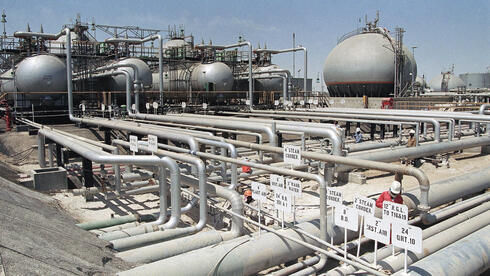
The 1980s Iran-Iraq War taught Saudi Arabia a hard lesson about the Strait of Hormuz. The response was the East-West Pipeline - the Petroline - a 746-mile engineering feat from Abqaiq to Yanbu that most observers forgot about until eight weeks ago.
Built in 1981 as insurance against exactly what happened on 28 February 2026, the pipeline sat largely dormant for decades. Expensive infrastructure that seemed unnecessary until it became essential overnight.
When Hormuz effectively closed, Saudi Aramco activated the pipeline and within 11 days had it running at full capacity: 7 million barrels per day flowing from the kingdom's eastern oil fields to the Red Sea port of Yanbu. Of those 7 million barrels, 5 million are available for export, with the remaining 2 million feeding domestic refineries on the west coast.
The pipeline encountered operational challenges in early April but was restored to full capacity within three days. That recovery speed demonstrated the operational resilience that matters when global oil markets are this fragile.

Logistics Pivot: From Sea to Land
While oil moved west through the pipeline, goods moved in the opposite direction. Cargo that normally arrived through Gulf ports redirected to King Abdullah and Jeddah Islamic ports on the Red Sea, then trucked across the Arabian Peninsula.
Since late February, 25,000 trucks have crossed into Kuwait via Saudi land routes. Tens of thousands more have supplied Bahrain, Qatar, and the UAE. The highways tell the story - convoys moving across the desert through Riyadh toward the eastern provinces.
The Saudi Ports Authority responded by adding two new shipping services at Jeddah Islamic this month with Maersk and Hapag-Lloyd, connecting the west coast directly to China, South Korea, Malaysia, and Singapore. A new 1 million square metre staging area at Jeddah Islamic Port now handles up to 40,000 trucks daily.
Neom in the northwest is managing European cargo from Danish shipping company DFDS, routing containers from Europe through inland corridors to the rest of the Gulf and Iraq.
Riyadh simplified overland shipping regulations, including allowing empty foreign-owned trucks to enter the kingdom to pick up export shipments - a pragmatic policy shift that accelerated cross-border logistics.
Aviation Absorption
When Kuwait and Bahrain closed their airspace, Saudi Arabia absorbed the regional aviation traffic. Kuwait's Jazeera Airways relocated operations to Hafar Al-Batin International Airport. Bahrain's Gulf Air shifted to Dammam.
The kingdom's aviation infrastructure proved capable of handling the additional capacity without significant disruption to domestic or international services.
Tourism Resilience
The tourism numbers defied expectations. Saudi Arabia recorded 37 million domestic and international tourists in Q1 2026, representing an 8 percent increase compared to the same period in 2025. Total tourism spending reached SAR 82.7 billion, down just 2 percent despite the regional conflict.
Domestic tourism actually grew 16 percent year-on-year in Q1, driven largely by Ramadan and Eid travel patterns. Nearly 29 million Saudis travelled within the kingdom during the quarter.
Hotel occupancy remained remarkably strong: Madinah reached 82 percent, Makkah 60 percent, and Jeddah 59 percent. The Umrah pilgrimage continued throughout the conflict period, with Jeddah operating as the gateway for international pilgrims with minimal disruption. Religious tourism proved geopolitically resilient in ways leisure travel could not.
The Execution Advantage
What emerges from these statistics is a picture of institutional execution capacity. Strategic infrastructure built 45 years ago for a contingency scenario activated smoothly when called upon. Energy exports continued flowing to international markets. Regional neighbours stayed supplied despite port closures. Tourism revenue held steady even as international aviation faced significant constraints.
The 45-year gap between building the Petroline in 1981 and fully activating it in 2026 demonstrates what long-term strategic planning looks like in practice. Most infrastructure investments show returns within years. This one took decades to prove its value, but when the moment arrived, it functioned as designed.
Regional Anchor Status
Having contingency infrastructure means nothing without the operational capacity to activate it quickly and recover from disruption faster than neighbouring economies. Saudi Arabia demonstrated both capabilities simultaneously.
As regional stability gradually returns, this combination of strategic foresight and crisis execution positions Saudi Arabia as the Gulf's economic anchor - the economy that maintains functionality when others face operational constraints.
The lesson extends beyond oil and logistics. Strategic infrastructure investments made during periods of relative calm create options during periods of crisis. Those options only translate into advantage when institutions possess the operational capacity to deploy them at speed.
For international businesses evaluating Gulf market entry or expansion, the past eight weeks provided a stress test of which economies maintain operational continuity under pressure. Saudi Arabia's performance in activating dormant infrastructure, absorbing regional logistics overflow, and sustaining tourism revenue growth offers empirical evidence of institutional resilience that matters for long-term investment decisions.
The Petroline was expensive insurance that sat unused for years. In 2026, it became the kingdom's primary export route. That is strategic planning meeting crisis execution.
If you are assessing market entry or expansion in the Gulf, the past eight weeks have already given you the data you need. Call us if you are looking to Execute.
Rana Maristani is Founder and CEO of R Consultancy Group, a strategic advisory firm specialising in Gulf market entry and education sector partnerships across Saudi Arabia and the UAE.


Comments